Artificial Intelligence (AI) is no longer just a technological issue. Its presence in education, communication, and everyday life is changing the way people inform themselves, interact, and build connections. This reality was reflected in the 3rd International Congress of Communication of the Conference of Religious from Brazil (CRB National), taken place on September 10 and 11 at the Santa Marcelina College, in São Paulo.
More than 300 people participated in the meeting, which brought together communicators, researchers, and members of the Consecrated Religious Life around the theme “Innovation, Emerging Technologies, Humanities, and Communication.” The activity addressed issues such as algorithms, digital culture, ethics, and human dignity, with a transversal question: how to take advantage of the possibilities of the new technologies without losing sight of the human dimension of communication.
The information about the Congress and its main debates was shared by the Sister. Neusa Santos, general coordinator of the meeting and Communication advisor of the National CRB. For the religious, the space aimed to promote exchange and discernment in light of the changes currently affecting society and communication processes. “We hope that this Congress will be a space for meeting, listening, learning, and building a communication that is increasingly human and committed to life”, expressed Sister Neusa Santos.
Artificial intelligence poses new dilemmas
During the Congress, there was a conference on “Artificial Intelligence, Algorithms, and Digital Culture,” presented by researcher Lucia Santaella from the Pontifical Catholic University of São Paulo. The presentation allowed an analysis of the current development of AI and its repercussions in various areas of society, particularly in education and communication. Santaella emphasized the need to accompany technological development with ethical criteria and tools that allow for guiding its uses.
The approach opened a broader debate about the responsibility of individuals and institutions in the face of technologies that are gaining increasing presence. The power of algorithms, the functioning of platforms, and the protection of human dignity thus appeared related to a fundamental question: what kind of relationships are being built in an increasingly digitalized culture.
For the Consecrated Religious Life, the challenge is not limited to learning to use new tools. It also involves discern its effects on people and on communities, especially when technology begins to occupy spaces that traditionally depended on human encounter.

Connected, but not necessarily accompanied
One of the questions that arose during the reflections was the distance between being permanently connected and experiencing true relationships. The possibilities for communication have multiplied, but at the same time there is concern about phenomena such as loneliness, social isolation, and the fragility of bonds.
The expansion of conversational systems introduces a new dimension to this reality. Some AI tools can hold conversations, respond in a personalized way, and even offer an experience similar to companionship. This capability raises questions about the place that these technologies may come to occupy in the lives of people going through situations of isolation.
The Congress did not present AI as the sole cause of problems such as loneliness or psychic suffering. The debate pointed, rather, to understanding how certain uses of technologies can deepen situations of vulnerability or modify the habits through which people relate.
In this scenario, communication regains an essential dimension for the ecclesial mission: the presence before the other. Listening, dialoguing, accompanying, and building a community cannot be reduced to the transmission of content nor be completely mediated by technological systems.
Caring for relationships in a time of transition
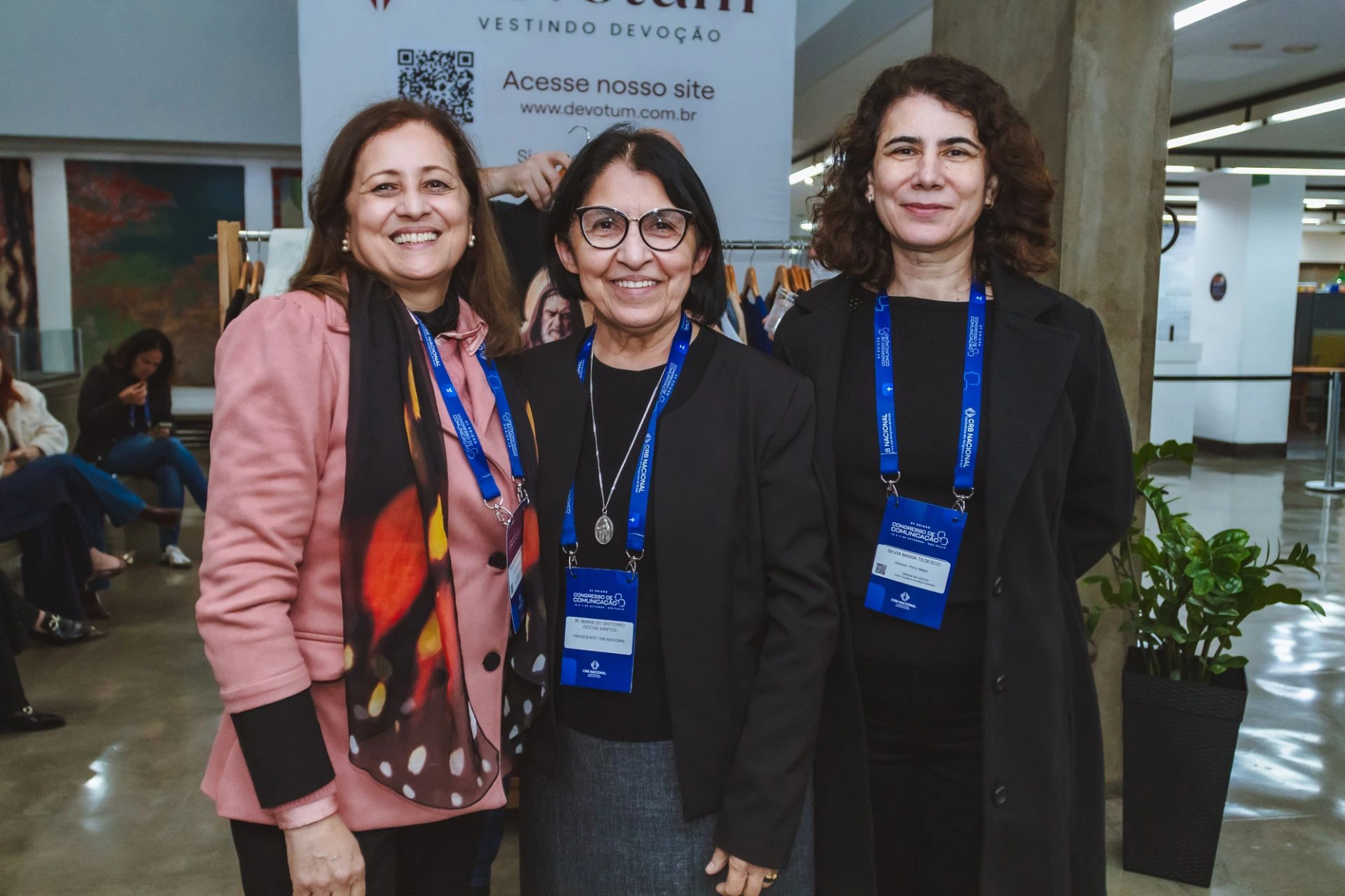
The president of the National CRB, Sr. Maria do Disterro Rocha, spoke about the need for communication to help interpret the changes of the present and to discern how to respond to them. “We are increasingly strengthening communication in the CRB so that it helps us perceive the challenges of the present time, discern the various paths we must take”.
The religious connected this process with the care of humanity and relationships. In her view, technological transformation requires an attitude capable of recognizing new scenarios without losing the ability to connect with people.
The reflections of the Congress agreed that the question cannot be limited to determining what machines can do. It is also necessary to observe what happens to people when intelligent tools begin to intervene in increasingly broader areas of everyday experience.
Human relationships, in the face of the advancement of artificial intelligence
The concern for human relationships will continue at the next International Communication Congress of the CRB National. During the 2026 edition, it was announced that the meeting will take place again in September 2027, on the 16th and 17th, under the theme “Communication and Artificial Intelligence: connections, loneliness, and the future of human relationships”.
According to Sister Neusa Santos, the next edition will seek to shift part of the attention from the capabilities of technology to its human and social consequences. Artificial companionship, relational isolation, dependence on digital environments, and mental health will be among the issues that will be put on the table. It will also be analyzed how conversational systems can modify the way people experience company, listening, and interaction.
The debate will also include questions about the boundaries between a tool that facilitates communication and a technology that could end up replacing certain forms of interpersonal relationship.
Truth and trust in the face of content generated by AI
Another of the challenges anticipated for 2027 will be related to information. The artificial generation of images, videos, and voices, along with the so-called deepfakes, presents new problems for journalism and for society. The ability to produce increasingly convincing synthetic content can hinder the identification of what is authentic and affect public trust. In addition, there are risks associated with digital fraud, misinformation, and automated influence campaigns.
The Congress will organize this reflection around four major fields: algorithmic mediation and human relationships in the public space; the integrity of information and trust; cultural production and the economy of attention; and governance, justice, and the global future of Artificial Intelligence.
Issues such as data protection, transparency, human oversight, cultural diversity, freedom of choice, and the concentration of technological power will also be present.

Church and society
The itinerary proposed by the National CRB suggests that the discussion on AI needs to incorporate an anthropological and social dimension. The new technologies are transforming the ways of working, learning, informing, and producing content, but they can also affect the way of living together and establishing relationships.
The challenge for ecclesial communication also involves discerning how to accompany people in a culture where smart technologies have a growing presence.
The question that remains open for the next Congress does not only refer to the future of machines. It is mainly about the future of people: how to maintain spaces for meeting, listening, care, and community when an increasing part of relationships is mediated by smart technologies..
Subscribe for free to our Whatsapp channel https://bit.ly/4hbWWN0
Discover the new 2026 offer of courses, diplomas, and degrees at Cebitepal https://bit.ly/4aHAue1
Because we must care for those who protect creation, the podcast La Vida pende de un Hilo arrives https://bit.ly/46cGUiB