The Bolivian Episcopal Conference was the venue for the presentation of the Methodological Guide to encourage ecological, personal, family, and community conversion, a digital tool that seeks to accompany individuals, families, communities, and institutions in a transformation process in the face of the socio-environmental crisis.
The proposal is the result of a process of research, dialogue, collective construction, and validation that involved Unitas, the Pan-Amazonian Ecclesial Network in Bolivia, and the Bolivian Catholic University, through the Research Center in Education and Psychopedagogy, Learning Zone. The Diocese of El Alto, the Archdiocese of Sucre, ecclesial communities, youth, catechists, teachers, and social organizations also participated.
During the launch, the executive director of Unitas, Mila Reynolds, explained that the initiative arose from the question: “How can we contribute from our territories, our communities, and our daily practices to respond to the socio-environmental crisis we are experiencing?”. The answer was concretized in a guide that aims to go beyond diagnoses and isolated actions to support ongoing processes of change. “It is not solely an educational material in the strict sense,” said Reynolds, it is a tool to recognize the connection between life, take responsibilities, transform habits, strengthen communion, and mobilize in favor of caring for our common home.
Conversion that begins in the person
The methodology is based on a comprehensive understanding of ecological conversion, inspired by the teachings of Laudato si’ and Laudate Deum, but linked to the experiences of the communities.
During the presentation, it was emphasized that the socio-environmental crisis cannot be addressed as an exclusively environmental issue. Pollution, climate change, loss of biodiversity, wildfires, the situation of the Amazon, and the impacts of extractivism are interconnected and also related to the living conditions of people.
“Everything is connected”, recalled Willy Llanque, executive secretary of the Pan-Amazonian Ecclesial Network in Bolivia involved in the guide's development, reiterating one of the ideas from Pope Francis's reflection on integral ecology.
Five moments accompany the process of conversion
The guide proposes five moments to accompany that process. The first is the recognition of interconnection, which invites understanding that human actions and omissions generate consequences. The second consists of taking on responsibility, recognizing that people are part of both the problem and the solutions. The third proposes changing habits and lifestyles, through conscious decisions related to consumption, waste, and other daily practices.
The fourth moment is the promotion of communion, which brings personal transformation to the family and community level. The fifth proposes developing mobilizing actions that are linked to changes in habits and to a prior process of reflection and transformation.
The proposal, as explained by MSc. Karina García Riveros, a research teacher at UCB, does not aim to generate isolated actions that disappear after a campaign. Ecological conversion is understood as a cyclical and continuous process that requires support until new habits are consolidated.
Five modules to understand the common home
The guide is structured into five modules. The first addresses the local socio-environmental reality and aims for people to look again at the territory in which they live: their neighborhoods, cities, communities, and ecosystems. The second module is dedicated to climate change; the third, to biodiversity; the fourth is titled “We Know the Amazon”; and the fifth addresses the interconnection between city and Amazon.
During the presentation, it was explained that one of the findings of the process was the lack of knowledge that exists in different urban spaces about the Amazon and its importance. Therefore, the module dedicated to this biome aims to bring its reality closer to the communities and show the benefits it provides even to those who live far from its territories.

Everything is connected
The guide also aims to change the perception that the city and the Amazon are separate realities. “They seem like two completely isolated things and the truth is that they are tremendously interconnected”, it was explained.
One of the examples used during the launch was that of the so-called “flying rivers”, which help to understand the relationship between the Amazonian forests, the clouds, and precipitation. The intention is for communities to recognize that phenomena occurring in the Amazon have direct consequences in other territories.
In this line, Willy Llanque recalled that more than 75% of Bolivian territory belongs to the Amazon Basin, a reality that, in his opinion, must be recognized to understand the country's responsibility in the care of these ecosystems.
From eucalyptus to the “flying rivers”: learning from the territory
The methodology incorporates examples of the consequences that past decisions can have on current ecosystems. During the presentation, Karina García recalled, for example, the expansion of eucalyptus in La Paz, a species initially introduced to protect the railway tracks. Its subsequent presence may have contributed to displacing native species such as the queñua and the kiswara.
The example allowed for raising the need for a transgenerational perspective on environmental education, capable of linking past decisions with the consequences experienced in the present and with the responsibilities that current generations have towards the future.
Experiences were also shared from Sucre, where communities recalled species of amphibians that could previously be found in their territories and that have now disappeared. These testimonies were incorporated as part of the reflection on the loss of biodiversity. The guide aims precisely for these experiences to allow a transition from abstract knowledge to a real relationship with the territory.
Digital tool for different contexts
The guide was initially conceived for the context of El Alto, but it has already been implemented and validated in other spaces, including the Archdiocese of Sucre and the Archdiocese of La Paz. Its structure is flexible and can be adapted to different ages and realities. The material is available in digital format and includes videos, presentations, documents, bibliography, and validation forms, as well as other downloadable materials.
The intention is to facilitate its use by educators and pastoral agents, taking into account that those who work in these areas have little time to prepare additional materials. The guide has also been validated with social organizations, ecclesial communities, educators, youth, and other actors. In Sucre, catechists, teachers, and youth participated in the process; while in La Paz, work was done with the Departmental Directorate of Faith and Joy.
Youth from the parishes of Rosario and San Roque formed the urban collective For the care of our common home, made up of 21 young people, with the purpose of encouraging processes of ecological conversion. The experience also began to translate into tangible actions. In the parishes, a space is being prepared to become a small urban forest, while promoting that other parishes can create their own “ecological corners”.
Download the guide here: https://redunitas.org/download/guia-metodologica-para-animar-la-conversion-ecologica-personal-familiar-y-comunitaria/
Towards the 18 ecclesiastical jurisdictions of Bolivia
One of the next steps announced during the launch is the realization of replicas of the workshops and processes of ecological conversion in the 18 ecclesiastical jurisdictions of Bolivia, in coordination with the Evangelization Area of the Bolivian Episcopal Conference.
The proposal aims to expand an experience that began in specific contexts and bring it to parishes, communities, educational centers, youth groups, and organizations from different regions of the country.
From the Bolivian Catholic University, Dr. Alejandra Martínez highlighted that material can reach different educational and community spaces in the country. She emphasized that, although the guide was born in El Alto, its structure and resources allow it to be contextualized to other realities. “Today we not only deliver a document, we deliver an invitation”, said Martínez: an invitation to look at the relationship between cities, personal actions, and the Amazon in a different way. The academic also insisted that ecological conversion cannot be reduced to symbolic actions or specific campaigns. The challenge, she explained, is to generate transformations that begin with people, reach families and communities, and subsequently express themselves in actions and collective decisions.
The Amazon as a responsibility of the whole country
For the promoters of the guide, recognizing the Amazonian dimension of Bolivia is essential to understand the responsibility that urban populations also have in its protection. The team insisted that caring for the Amazon is not an exclusive task of those who inhabit it. The connection between forests, water, climate, and cities means that decisions made in one territory have repercussions in others.
The proposal invites, therefore, to “amazonize” the perspective, a concept used during the process to express the need to recognize that the Amazon is part of the everyday life of the entire country.
Dr. Martínez explained that initially the term might seem strange in cities like La Paz or El Alto, but it takes on another meaning when it is recognized that 75 % of Bolivian territory is Amazonian and that the entire population is linked to the goods provided by the land.
Church that brings ecological conversion to the communities
The presentation also included messages from representatives of the Church who accompanied the process. Monsignor René Leigue, president of the Ecclesial Pan-Amazon Network in Bolivia, expressed in a recorded message his support for the initiative and thanked the work done together with the Bolivian Catholic University. “May this be the beginning of a true conversion”, he stated, calling to conserve and care for nature as a gift that must be protected. He also encouraged the involved institutions to continue working for the common good and the care of our common home.
From the Archdiocese of Sucre, Father Ricardo Ojeda shared that the guide can help promote new habits related to recycling, reducing plastic use, responsible food use, tree planting, and water care.
The priest reported that these practices are already beginning to multiply in parishes and catechesis spaces, where the care of nature is incorporated as a main part of the formation.
“Change starts with one”
The launch concluded with the symbolic delivery of the guide to the Bolivian Episcopal Conference. Although it is a digital document, the organizers emphasized that its purpose is to become a practical tool to accompany processes in communities and educational spaces.
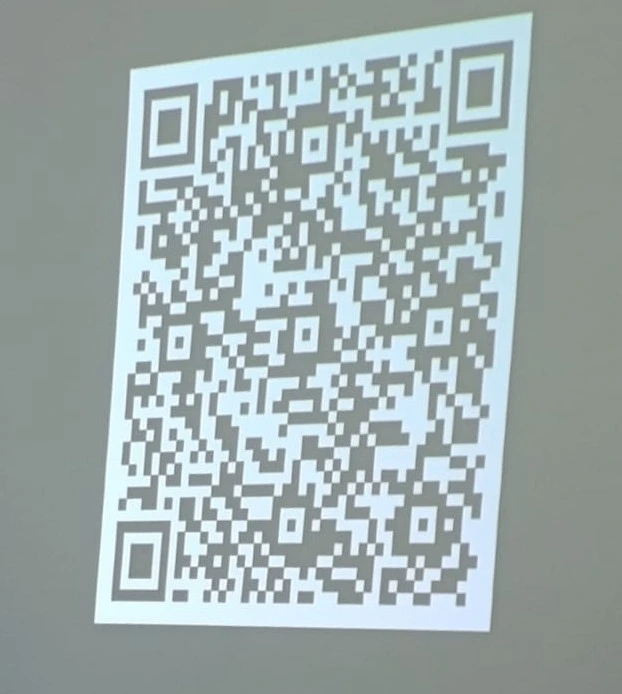
Through a QR code, the participants were able to access the material, which will also be disseminated through the digital platforms of the institutions that participated in its development.
The final invitation was not to settle only for downloading or reading the material, but to put it into practice. “Change starts with one, with one. Let’s be that one and let’s be that one from the start”, it was expressed during the closing of the meeting.
Subscribe for free to our Whatsapp channel https://bit.ly/4hbWWN0
Discover the new 2026 offer of courses, diplomas, and degrees at Cebitepal https://bit.ly/4aHAue1
Because we must take care of those who protect creation, the podcast La Vida pende de un Hilo arrives https://bit.ly/46cGUiB